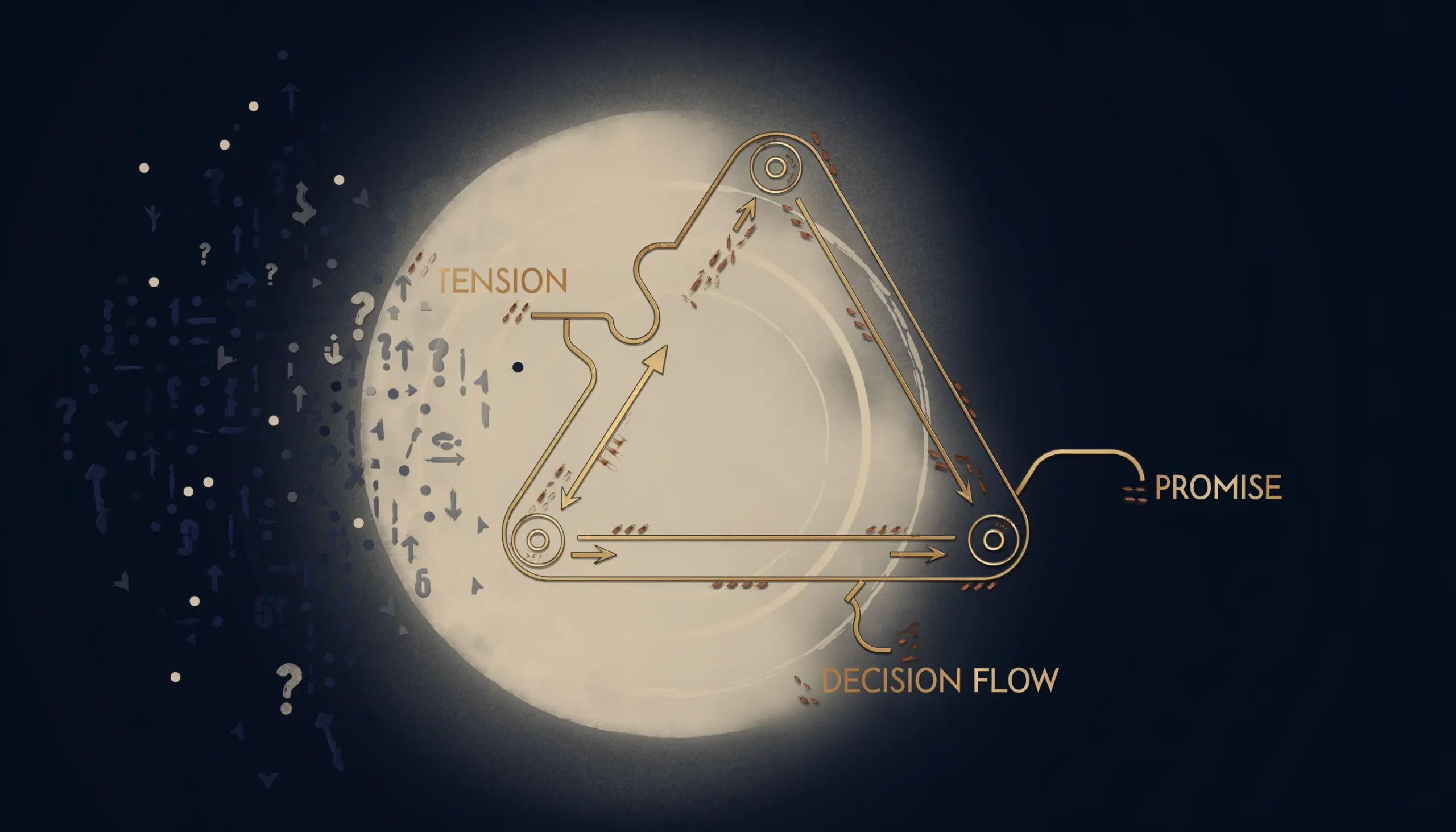
Price anxiety rarely begins at the negotiation table. It starts when a business defines its value as “more, faster, or better” than the incumbents already in the buyer’s shortlist. That framing signals sameness, so procurement defaults to price as the universal scoring mechanism.
Every incremental upgrade—extra calls, add-on deliverables, bonus audits—reinforces the idea that the offer is just another version of what prospects already know. Buyers respond rationally: if two options look identical, the safest choice is the cheapest. The seller interprets that pushback as a marketing problem instead of a structural one and keeps feeding the comparison machine.
Escaping the price trap requires more than courageous pricing. It demands a redesign of the business architecture so the market experiences a different category of solution. When structural difference is visible, buyers chase access rather than audition vendors.
Price competition centralizes power with the buyer
When an offer is framed around incremental superiority, the buyer controls every variable. They can elongate the sales process, manufacture competing bids, and weaponize procurement checklists. The seller becomes a contestant rather than a setter of terms.
Comparison thrives on interchangeable structures
Commoditized service models share identical delivery mechanics: scoped hours, standard deliverables, and reactive communication. That sameness gives buyers clean spreadsheets and clear leverage. Even if one vendor “cares more,” the format makes price the only objective difference.
Procurement responds to risk, not empathy
Enterprise buyers aren’t malicious; they are risk managers. If you have not demonstrated a unique structure, their fiduciary duty is to grind price and diversify suppliers. The seller mistakes this for unfair pressure when it is simply the logical result of offering something legible and interchangeable.
Structural differentiation rewrites the decision frame
Breaking the trap starts by narrowing the boundaries of who can even buy. Specialists with sharp market definitions and problem statements naturally repel generic RFPs, which is precisely what preserves pricing power.
Methodology must be visible, not merely claimed
Founders often talk about their “proprietary process” yet show nothing verifiable. Structural differentiation requires artifacts—diagnostic models, governance cadences, decision checkpoints—that prove a different path to value. When prospects see a system, they infer scarcity.
Narrative should make comparison feel absurd
A strong narrative explains why the old way fails and why your structure eliminates that failure. Once the narrative lands, comparing you to the generalist alternative feels as incoherent as comparing a surgeon to a general practitioner. Narrative is the buyer’s mental shortcut for understanding why price is no longer the first filter.
Demand architecture makes buyers qualify themselves
The top 1% operationalize scarcity. They set capacity, publish eligibility criteria, and choreograph buyer experience so prospects discover there is more demand than supply. Scarcity rooted in operational truth—not gimmicks—reorients power.
Pre-sale environments should mirror delivery
Consultative diagnostics, pre-engagement workshops, and rigorous intake questionnaires all preview what working together feels like. When the sales environment carries the same discipline as delivery, prospects self-sort. They realize they are entering infrastructure, not hiring extra hands.
Offers must encode the difference economically
Monetization architecture is the proof point that all of this is real. Packaging access around transformation milestones, governance rhythms, or managed risk makes price a function of structure. The buyer pays for integration into a system, not for units of labor.
Decision velocity is the hidden dividend
When the market sees an incomparable structure, the sales cycle compresses. Buyers know fewer suppliers can deliver the promise, so they spend less time auditioning and more time assessing their readiness. Shorter cycles mean less time defending price and more time reinforcing fit.
Authority compounds when everything aligns
Positioning, offer design, client experience, and monetization either reinforce each other or erode trust. When they align, every touchpoint communicates inevitability: this is the only team built for this tension. Authority then becomes a structural asset that protects price long after the initial launch.
Conclusion
Trying to be better keeps you in the audition line. Rebuild the business so the market encounters a distinct structure, experiences a disciplined demand path, and is invited to qualify for access. That is the only sustainable exit from the price trap: become incomparable and let price signal commitment rather than compromise.