
CONCEPT
Monetization Architecture
Monetization architecture defines how a business converts its expertise, positioning, and value creation into revenue.
It describes the structural design of offers, pricing models, and revenue pathways that sustain the company.
Rather than focusing on isolated sales tactics or short-term campaigns, monetization architecture organizes how value is packaged, delivered, and exchanged over time.
When monetization architecture is coherent, offers reinforce each other and revenue becomes predictable. When monetization is fragmented, growth depends on constant reinvention and unstable income streams.
Monetization architecture therefore determines whether a business scales through structure or through continuous effort.
FRAMEWORK
The Structural Components of Monetization
Monetization architecture emerges from several interconnected elements that define how value is packaged and exchanged.
Why Monetization Architecture Matters
Many companies focus heavily on marketing while giving little attention to the structure of their revenue model.
This creates a common pattern.
- Traffic increases.
- Leads arrive.
- Sales occur.
Yet revenue remains inconsistent.
The underlying issue is rarely the marketing itself. It is the absence of a coherent monetization architecture.

A well-designed monetization architecture aligns offers into a clear progression that supports both client outcomes and business stability.
01
Offer Structure
Offer structure determines how services or products are organized within the business.
Instead of isolated offers created independently, a strong structure arranges offers into a coherent progression.
Entry points attract new clients.
Core offers deliver the primary transformation.
Advanced services deepen the relationship or expand impact.

When offers reinforce one another, the business develops a natural growth pathway for clients.
02
Pricing Logic
Strategic pricing is not determined only by market comparison. It considers the transformation delivered, the positioning of the business, and the sustainability of delivery.
When pricing logic aligns with positioning, revenue reflects the true value created.
Without clear pricing logic, companies often underprice their work or create inconsistent pricing across offers.

Pricing reflects how value is translated into economic exchange.
03
Revenue Pathways
Revenue pathways describe how clients move through the business over time.
Some begin with entry offers and progress toward deeper engagements. Others enter directly through premium services.
The architecture defines these paths intentionally so the business can grow through structured progression rather than random transactions.
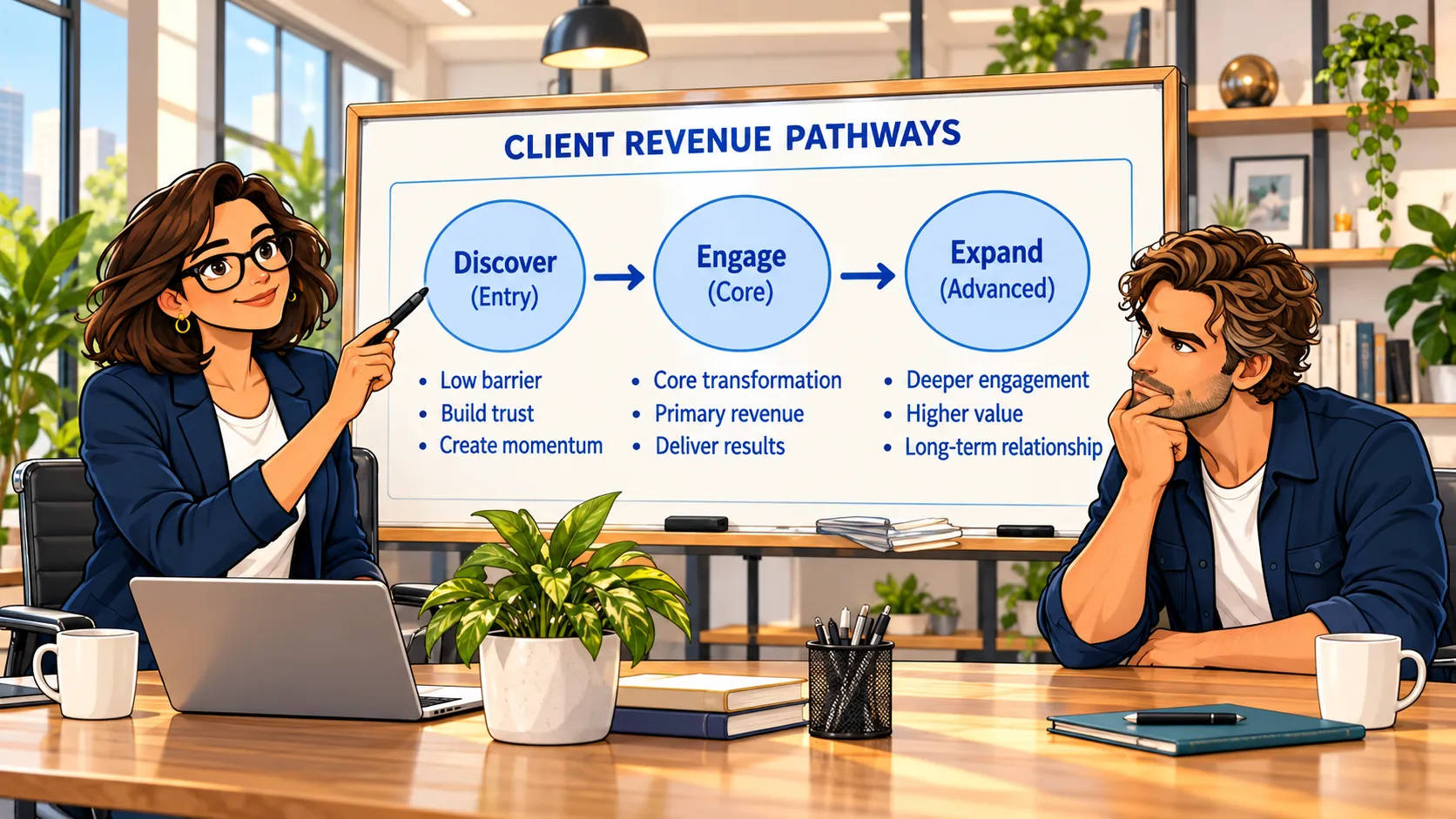
When revenue pathways are clear, client relationships develop naturally and retention increases.
Where Monetization Architecture Usually Breaks
Revenue structures rarely fail because of a single decision.
More often, monetization erodes gradually.
New offers are added to respond to specific requests.
Pricing adjustments are made independently across services.
Promotions introduce temporary offers that remain permanently.
Over time, the offer landscape becomes fragmented.
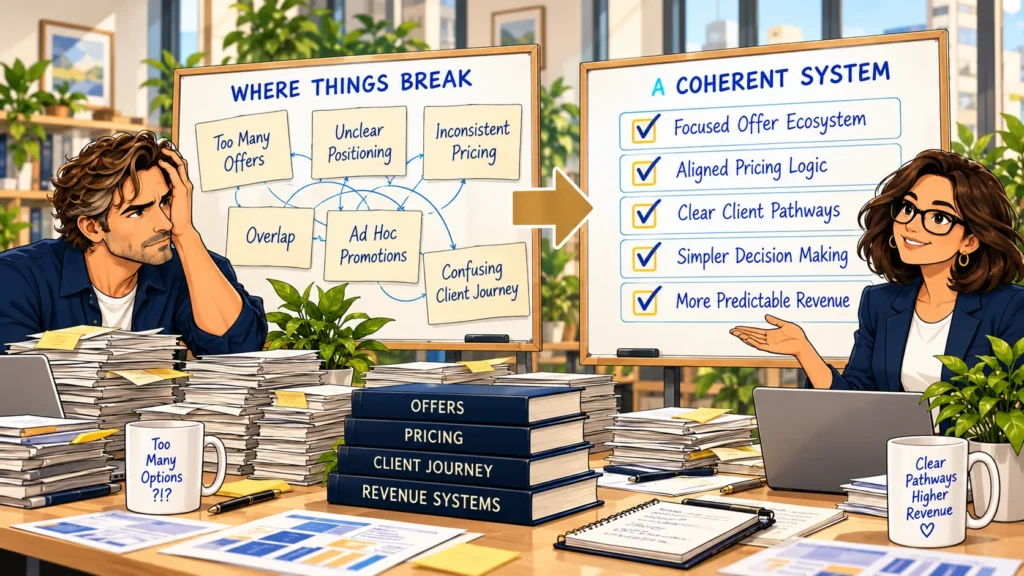
Clients struggle to understand the most relevant starting point.
Sales conversations require extensive explanation.
Revenue becomes dependent on constant promotional activity.
Rebuilding monetization architecture restores clarity to the offer ecosystem and creates a stable revenue foundation.
Related Insights Exploring This Concept

Should You Narrow Your Audience or Broaden Your Offer First?
Diagnose whether stalled growth comes from positioning or monetization before narrowing your audience or expanding your offers.

The Tools Change. The Commercial Functions Do Not.
Technology changes how businesses operate. It does not remove the need for a clear offer, effective distribution, buyer response, and controlled assets.

When a Service Business Needs Offer Boundaries More Than More Leads
Many service businesses think they need more leads when the real constraint is weak offer boundaries.
Why Offer Research Should Happen Before More Marketing
More marketing rarely fixes an offer the business still does not understand well enough to structure, price, or explain clearly.

Why Some Products Quietly Destroy Margin
Some products destroy margin not because they fail to sell, but because they teach the business to earn in structurally expensive ways.

Operational Mess Is Often a Packaging Problem Before It Is an Operations Problem
Many operational problems begin earlier than founders think. Weak packaging often creates the delivery chaos later blamed on operations.

Demand Validation Fails When Passive Interest Looks Like Buyer Intent
Demand validation breaks when founders confuse attention, approval, and curiosity with the stronger signals that reveal real buyer intent.

Why Testing Demand Requires Friction Before Fulfillment
Real demand appears when buyers accept friction. Curiosity is attention. Commitment is commercial signal.

Why Engagement Is a Weak Proxy for Demand
Engagement often looks like proof of demand, but attention only becomes demand when the business can convert relevance into a clear buying path.

Why a Polished Brand Can Still Feel Commercially Weak
A polished brand still feels weak when buyers can see credibility but cannot quickly understand value, fit, and the path to a confident decision.

Monetization architecture transforms expertise into a coherent economic system where revenue grows through structure rather than constant effort.