
CONCEPT
Decision Architecture
Decision architecture defines how strategic choices are structured within a company.
It describes the principles, filters, and priorities that guide how opportunities, risks, and initiatives are evaluated.
Rather than relying on intuition, urgency, or external pressure, decision architecture establishes a consistent framework that aligns choices with the long-term direction of the business.
When decision architecture is coherent, companies evolve deliberately and maintain strategic clarity. When decisions are reactive or inconsistent, businesses gradually drift away from their original positioning.
Decision architecture therefore determines whether growth results from intentional strategy or from accumulated reactions.
FRAMEWORK
The Structural Components of Decision Architecture
Decision architecture emerges from several interconnected elements that determine how choices shape the evolution of the business.
Why Decision Architecture Matters
Many companies assume their challenges originate from marketing, sales, or operational problems.
In reality, instability often comes from inconsistent decision patterns.
New opportunities appear attractive in isolation.
Short-term revenue pressure influences long-term strategy.
External advice introduces tactics disconnected from the company’s structural direction.
Individually, these decisions may seem reasonable.
Collectively, they reshape the company into something less coherent.

Decision architecture provides a framework that ensures choices reinforce strategic direction instead of gradually fragmenting it.
01
Decision Filters
Decision filters define the criteria used to evaluate opportunities.
Before pursuing a new initiative, businesses with strong decisin architecture assess whether the opportunity reinforces their positioning, monetization model, and long-term objectives.
These filters prevent growth from drifting into unrelated markets or inconsistent services.

Without them, companies often expand into directions that weaken their strategic clarity.
02
Priority Hierarchy
Decision architecture establishes which aspects of the business are fundamental and which remain flexible.
Positioning decisions typically sit at the highest level because they define the role the company occupies in its market.
Operational choices can evolve more frequently as long as they remain aligned with this strategic core.

This hierarchy allows companies to adapt without losing coherence.
03
Decision Rhythm
Strategic decisions benefit from reflection and structural analysis.
Operational decisions require speed and responsiveness.
Decision architecture distinguishes these rhythms so businesses avoid making structural changes impulsively while still maintaining operational agility.
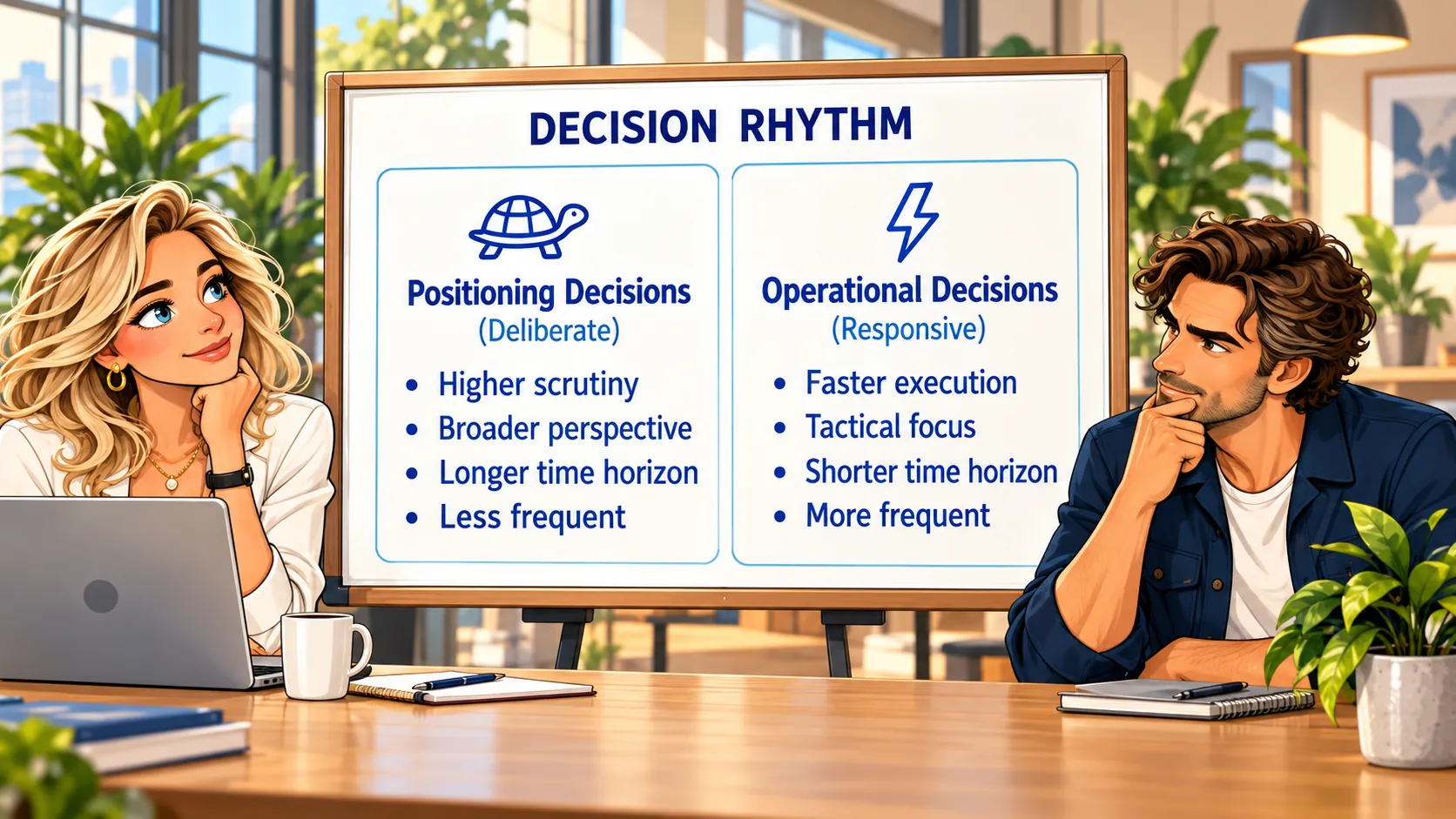
Different decisions require different tempos.
Where Decision Architecture Usually Breaks
Strategic coherence rarely disappears because of a single decision.
More often, it erodes gradually.
A promising opportunity bypasses strategic filters.
Short-term pressures influence structural choices.
New initiatives accumulate without reinforcing a coherent direction.

Over time, the company becomes harder to define.
The business may still function, but its decisions no longer reinforce a clear trajectory.
Rebuilding decision architecture restores strategic discipline and ensures that future choices support long-term coherence.
Related Insights Exploring This Concept

Facebook Ad Clicks Without Sales: The Decision Handoff Is Broken
Clicks without sales often expose a broken decision handoff between the ad promise, landing page, proof, offer, and next step.

Why Nobody Is Endlessly Fascinated With Giraffes
Being distinctive earns attention. A durable market advantage comes from a difference that keeps changing how buyers understand and decide.

An Evidence Ledger Is Part of Your Knowledge Architecture
An evidence ledger turns scattered research into governed knowledge that can support better decisions without hiding uncertainty.

Stop Paying Stranger Prices for Every New Customer
One customer can reduce the cost of reaching the next, but only when the business turns trust spillover into an acquisition system.

Why a More Sophisticated Business Can Become Harder for Customers to Understand
Sophistication creates customer confusion when a business exposes its internal complexity instead of organizing it around a clear decision.

Why Advertising Fails When It Is Asked to Close the Sale
Advertising works best when it opens the first door, then hands the buyer into a controlled path that helps the right prospect decide.

Why First-Time Founder Markets Need Verification More Than Promises
In low-trust founder markets, buyers do not need more promises first. They need a business that makes trust easier to verify.

Why Proof Fails When Buyers Cannot Translate Your Expertise
Proof fails when buyers can see that you know a lot, but still cannot tell why that knowledge matters for their decision.

Demand Validation Fails When Passive Interest Looks Like Buyer Intent
Demand validation breaks when founders confuse attention, approval, and curiosity with the stronger signals that reveal real buyer intent.

Strategy Only Matters When It Changes This Week’s Decisions
Strategy matters only when it changes what a founder prioritizes, refuses, and commits to in real decisions.

Decision architecture ensures that business growth emerges from consistent strategic choices rather than a sequence of reactive adjustments.